Home - Products - Flow Measurement Devices - Open Channel Flowmeter - Flumes

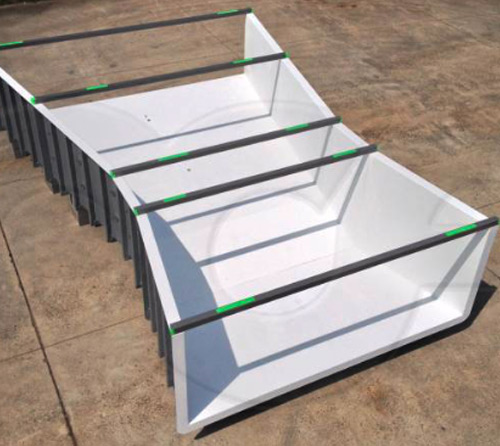
The Parshall Flume is an economical and accurate way of measuring water flow in open channels and non-full pipes. Originally the flume was developed to measure surface waters, water rights apportionment, and irrigation flows. However, its use has expanded to include measuring sewage flow (both in pipe and treatment plants), industrial discharges, dam seepage, and other applications.
As a class of (22) standard sizes, the Parshall Flume is the most commonly used and widely recognized flow measurement flume!
Parshall Flumes Material Options:
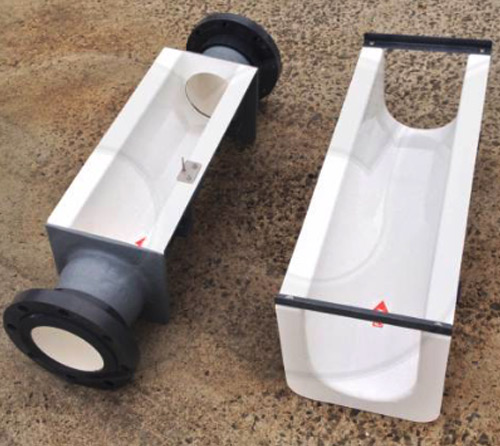
Unlike most other flume styles developed for irrigation flows and then applied to other uses, the Palmer Bowlus Flume was specifically designed to measure sanitary sewage / wastewater flows from the outset.
The Palmer Bowlus Flume is widely used to measure industrial discharges, municipal sewer flows, and influent / effluent at wastewater treatment plants and is second only to the Parshall Flume in popularity.
The Dust Bowl experienced by the United States during 1930’s saw the establishment of the Soil Conservation Service (SCS) on April 27, 1935. The SCS was established as a permanent agency the US Department of Agriculture with a mission to conserve the nation’s soil and water resources.
With this mandate, researchers at the SCS began the investigation and development of a class of flumes suitable for use in measuring agricultural flows. The H Flume, so called because it was the eighth in a series of flumes investigated, combined the flow sensitivity of a narrow angle V-notch weir with the flat floor and self-cleaning properties of a flume.
The H series of flumes are more modified weirs than they are true flumes – with a V-shaped throat and no diverging / discharge section. The H Flume design allows a wider range of flows than any other flume type – providing low flow sensitivity as well as the ability to measure high flow rates. Applications such as edge-of-field runoff monitoring that have low average flows and substantially higher rain even flows are idea candidates for H Flumes.
The flat floor of the H Flumes means that it passes sediments and smaller debris fairly easily. However, smaller HS / H Flumes are generally not recommended for use on flows containing sanitary solids or larger debris as these can lodge in the narrow discharge of the flume.
H Flumes Material Options:
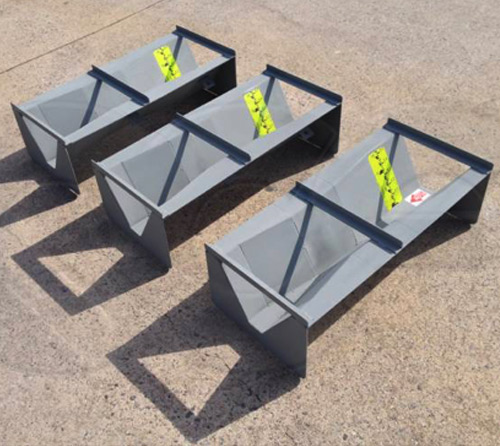
Like many flume types, the Trapezoidal Flume was developed primarily to measure irrigation flows. The goal was to design a flume that was capable of accurately measuring a much wider range of flows than those of the Parshall Flume - with particular emphasis on low flow sensitivity.
Trapezoidal Flumes are well suited to agricultural applications. Their flat floor and trapezoidal cross-section mean that the flumes conform to the normal shape of ditches, swales, and other irrigation channels.
As with the Parshall Flume, the use of Trapezoidal Flumes has expanded beyond its agricultural roots. Trapezoidal Flumes can now be found measuring industrial discharges, sanitary sewers, and dam seepage.
A class of (10) different sizes, Trapezoidal Flumes can be an excellent choice where flows are variable, the channel is flat, or where the debris load in the flow stream is high.
Below 10 gpm [0.6309 l/s], Trapezoidal Flumes provide the greatest usable head than any flume other the HS Flume - without the need for free-spilling discharge like the HS Flume.
Trapezoidal Flumes in several different materials
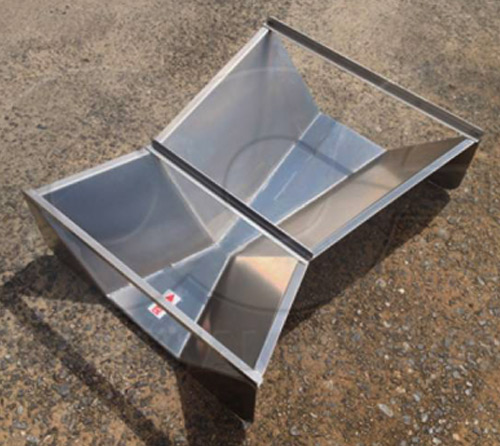
The Parshall Flume is an economical and accurate way of measuring water flow in open channels and non-full pipes. Originally the flume was developed to measure surface waters, water rights apportionment, and irrigation flows. However, its use has expanded to include measuring sewage flow (both in pipe and treatment plants), industrial discharges, dam seepage, and other applications.
As a class of (22) standard sizes, the Parshall Flume is the most commonly used and widely recognized flow measurement flume!
Cutthroat Flumes in several different materials
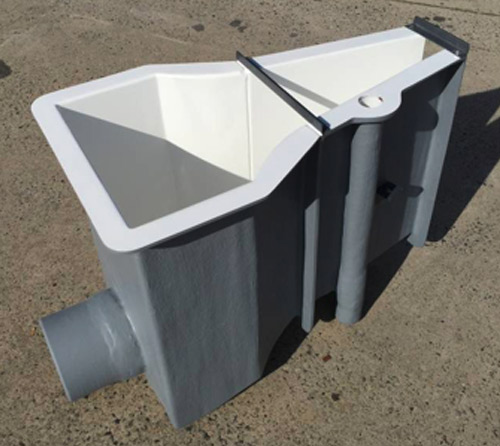
The Montana Flume is a modification of the widely used Parshall Flume. The flume takes it shape from the hourglass of the Parshall, but omits both the throat and discharge sections - leaving only the flat-floored converging section. With the deletion of the throat and discharge sections, the Montana Flume requires free-spilling flow off the end of the flume.
Montana Flumes are inexpensive and accurate ways of measuring the flow of water in a variety of applications.
Just like the Parshall Flume, the Montana Flume is available in 22 different sizes – although, in practice, Montana Flumes larger than 48-inches in size are rarely used.
Of the materials, fiberglass is most commonly used to measure sanitary / municipal sewage flows, while stainless steel is most common for discharges with corrosive chemicals, high temperatures, or abrasive solids or where vandalism is a concern. Where only lightweight and abrasion resistance are sought, aluminum is an excellent material choice. Finally, for water rights and irrigation applications, most Parshall Flumes are made from galvanized steel.
Montana Flumes in several different materials
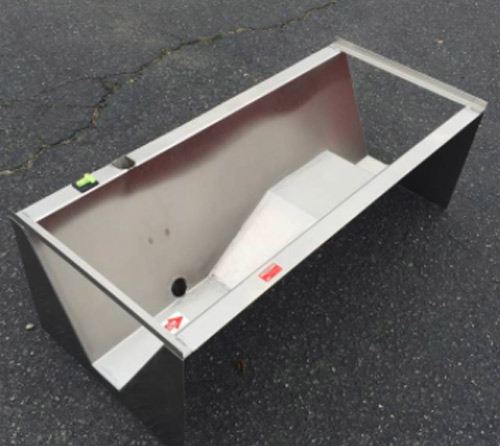
A class of portable, long-throated flumes, the RBC is a relatively recent (1984) flume developed to measure flows in earthen channels and furrows by researchers at the U.S. Department of Agriculture and the International Institute for Land Reclamation.
Named for its developers, Messer's Replogle, Bos, and Clemmens, the RBC Flume is a series of 5 different flumes intended to be highly portable, easy to make, and extremely accurate.
The RBC Flume has a constant, truncated V-shape allowing it to conform to the typical shape of furrows and irrigation channels. The throat of the flume consists of a sloped ramp (similar to a Palmer Bowlus Flume).
As a long-throated flume, the RBC Flume can be designed and calibrated using computer analysis. This analysis eliminates the need to laboratory or field rate new or nonstandard RBC flumes sizes with excellent accuracy.
Like its short-throated brethren, the Trapezoidal and Cutthroat flumes, the flat floor of the RBC Flume makes it less expensive to install or retrofit into existing channels.
As with other long-throated flumes, the RBC Flume has a high modular limit (submergence transition) of 90%.
RBC Flumes in several different materials